
Table of Contents
 ▶
- DBMS Architecture in Hindi – DBMS आर्किटेक्चर क्या है?
- Types of DBMS Architecture in Hindi – DBMS आर्किटेक्चर के प्रकार
- Three-Schema Architecture in Hindi – थ्री-स्कीमा आर्किटेक्चर
- Data Independence in Hindi – डाटा इंडिपेंडेंस
- Advantages of DBMS Architecture in Hindi – DBMS आर्किटेक्चर के फायदे
- Disadvantages of DBMS Architecture in Hindi – DBMS आर्किटेक्चर की सीमाएं
- Difference Between 2-Tier and 3-Tier Architecture in Hindi – 2-Tier और 3-Tier आर्किटेक्चर में अंतर
- FAQs
DBMS Architecture in Hindi – DBMS आर्किटेक्चर क्या है?
Endless Horse – Think You Can Find the End? Play The Game- DBMS Architecture उस design और structure को कहते हैं जो यह बताता है कि डेटाबेस सिस्टम के अलग-अलग हिस्से (users, application, डेटाबेस) आपस में कैसे जुड़े होते हैं और डाटा कैसे flow करता है।
- सरल शब्दों में समझें तो यह एक blueprint है, जो दिखाता है कि यूज़र की request डेटाबेस तक कैसे पहुंचती है और वहां से जवाब वापस कैसे आता है।
- इसका मुख्य उद्देश्य होता है डेटाबेस के अलग-अलग components को इस तरह organize करना कि performance, security और management आसान बनी रहे।
- इसमें client, application server और डेटाबेस सर्वर जैसे अलग-अलग layers शामिल हो सकती हैं, जो topology के हिसाब से बदलती रहती हैं।
- DBMS Architecture का इस्तेमाल छोटे personal applications से लेकर बड़ी enterprise-level systems तक हर जगह होता है।
- इसे design करने वाले database architects यह तय करते हैं कि system कितना scalable, secure और maintainable होगा।
- अगर architecture सही तरीके से design न किया जाए, तो system धीमा हो सकता है या security से जुड़ी समस्याएं आ सकती हैं।
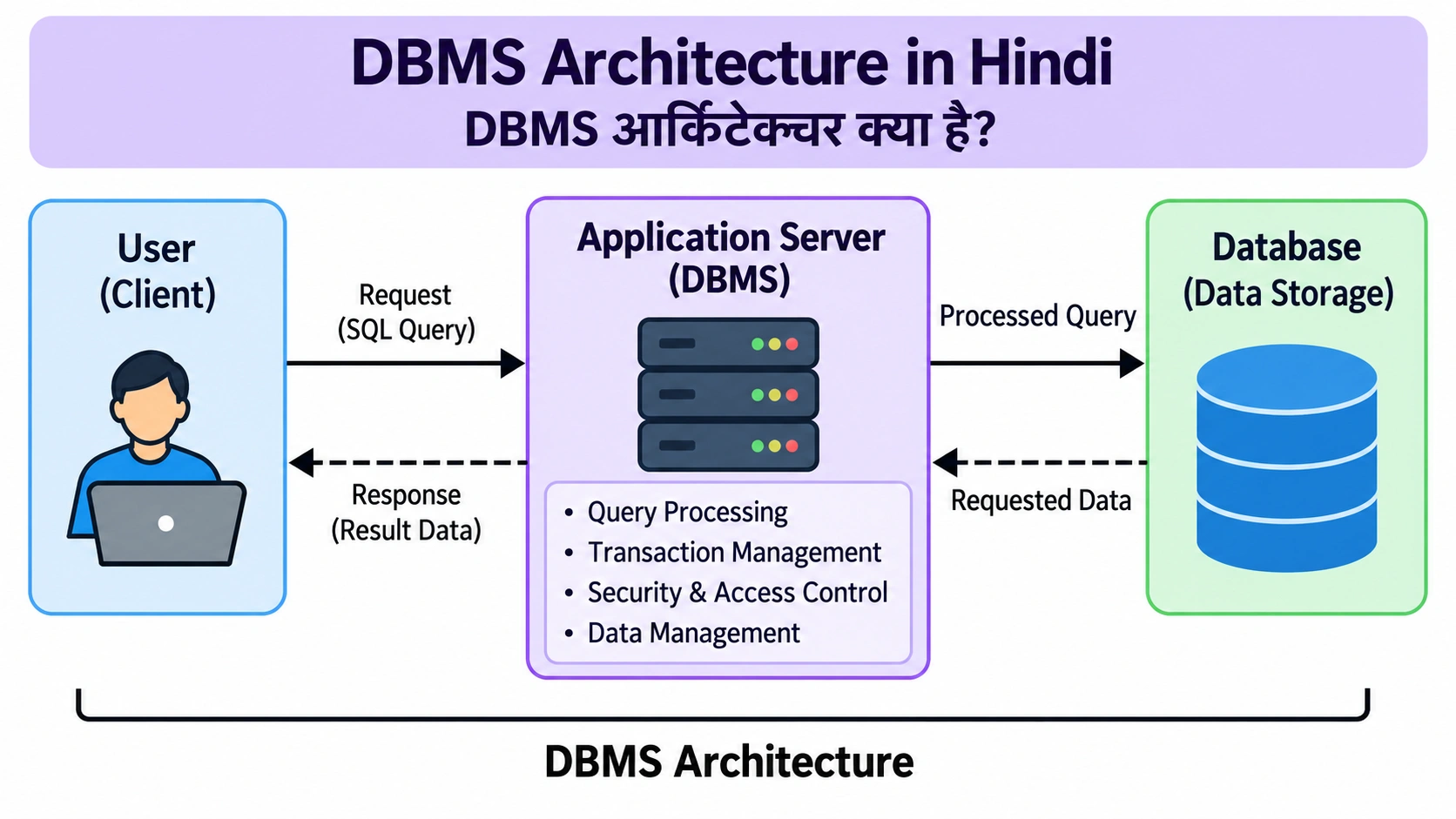
Example of DBMS Architecture (उदाहरण)
जब आप किसी banking app में login करके अपना balance देखते हैं, तो आपका मोबाइल app एक request भेजता है, वह request bank के application server तक जाती है, और वहां से server डेटाबेस से डाटा निकालकर वापस आपको दिखाता है — यह एक real-life example है कि DBMS Architecture में अलग-अलग layers कैसे मिलकर काम करती हैं।
Types of DBMS Architecture in Hindi – DBMS आर्किटेक्चर के प्रकार

यह layers की संख्या के आधार पर तय होता है कि यूज़र और डेटाबेस के बीच कितने stages से होकर communication गुजरता है:
1. 1-Tier Architecture
1-Tier Architecture में यूज़र, application और डेटाबेस — तीनों एक ही सिस्टम पर मौजूद होते हैं। यूज़र सीधे डेटाबेस के साथ interact करता है, बीच में कोई अलग server नहीं होता। इसका इस्तेमाल ज्यादातर local applications या development/testing के दौरान किया जाता है, जैसे किसी developer के अपने कंप्यूटर पर चलने वाला एक छोटा database tool।
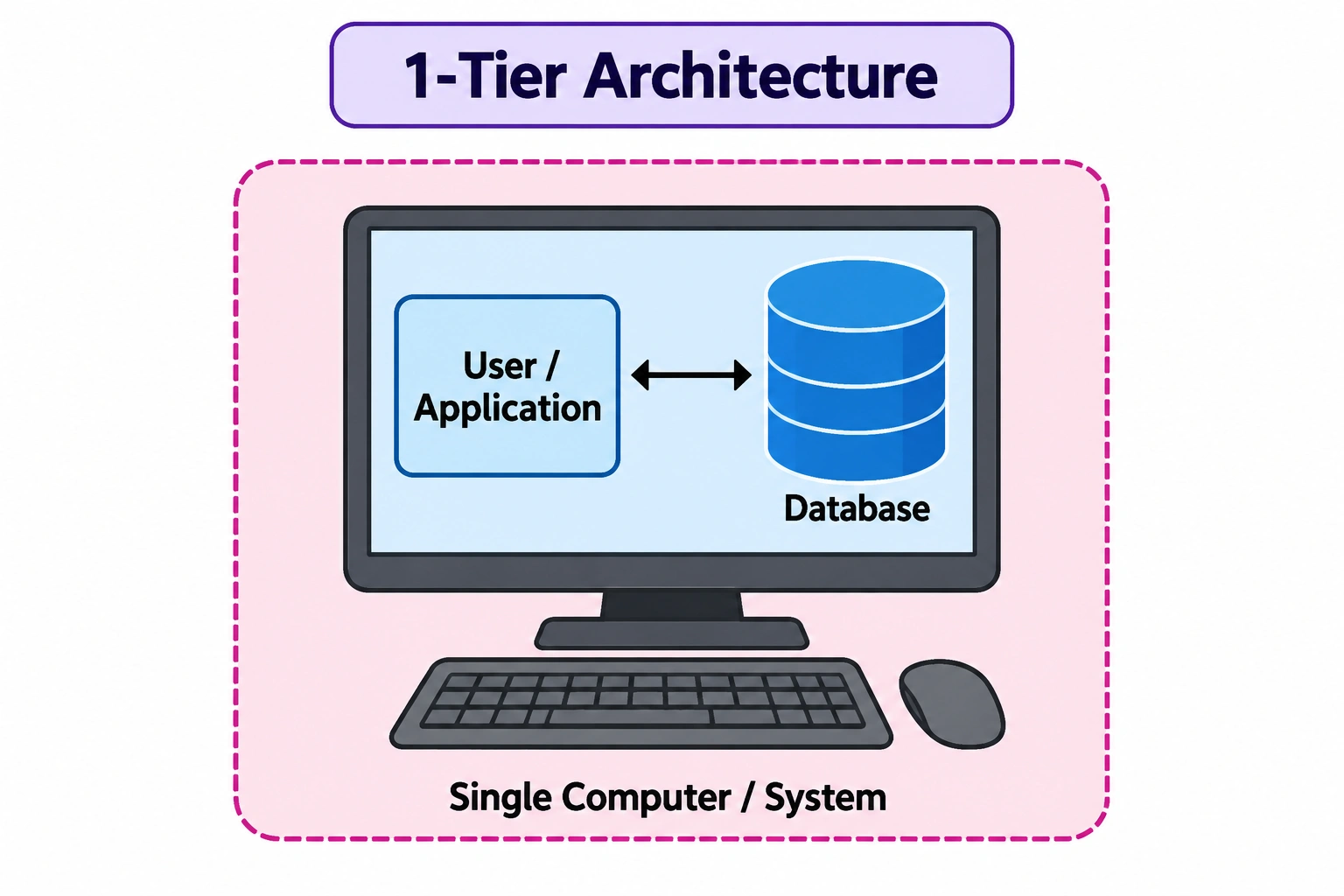
2. 2-Tier Architecture
2-Tier Architecture में एक client (जो यूज़र इस्तेमाल करता है) सीधे डेटाबेस सर्वर से जुड़ा होता है, कोई बीच का application server नहीं होता। Client खुद query भेजता है और डेटाबेस से सीधे response प्राप्त करता है। यह छोटे और medium size के applications के लिए उपयुक्त होता है, जहां यूज़र की संख्या सीमित हो।
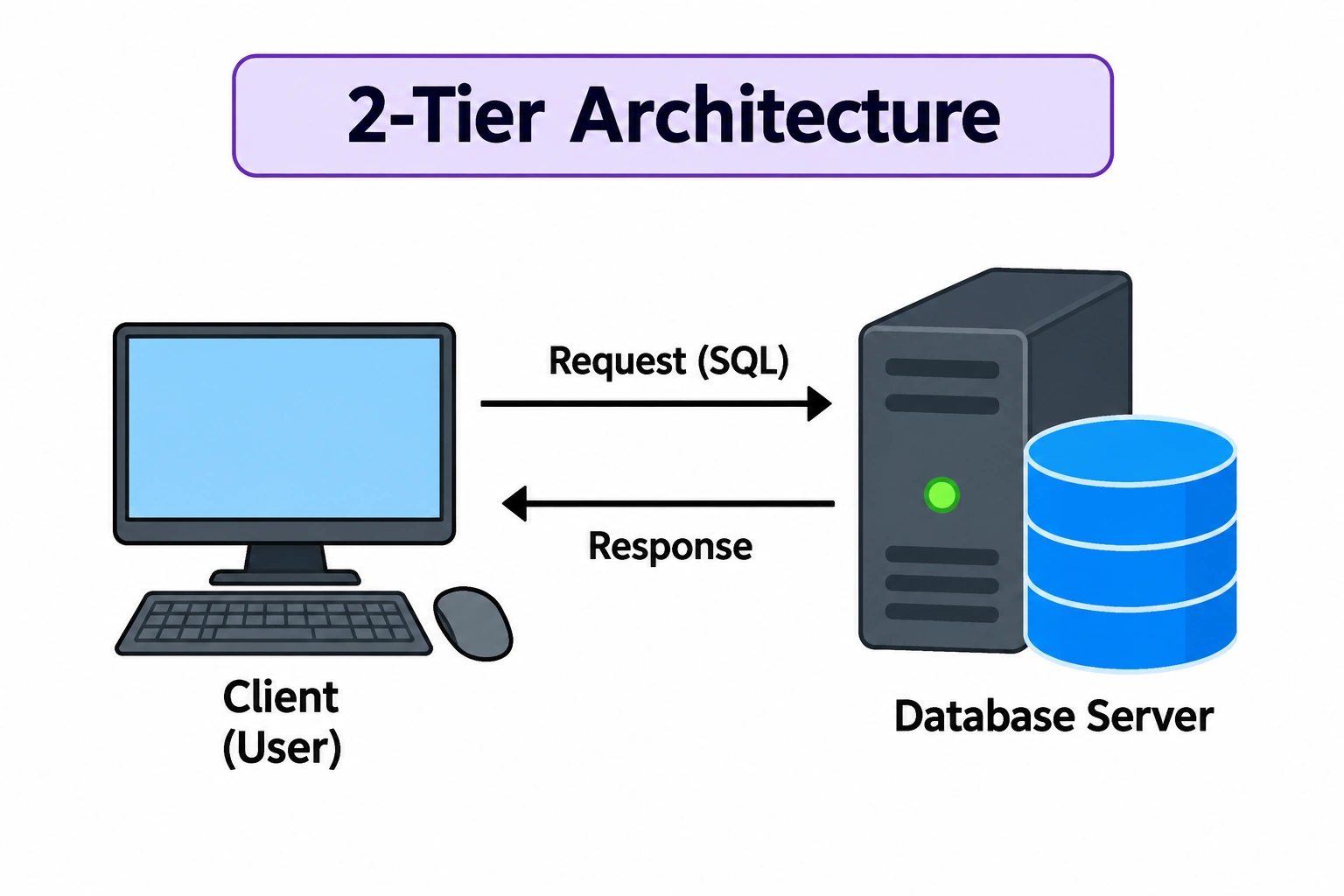
3. 3-Tier Architecture
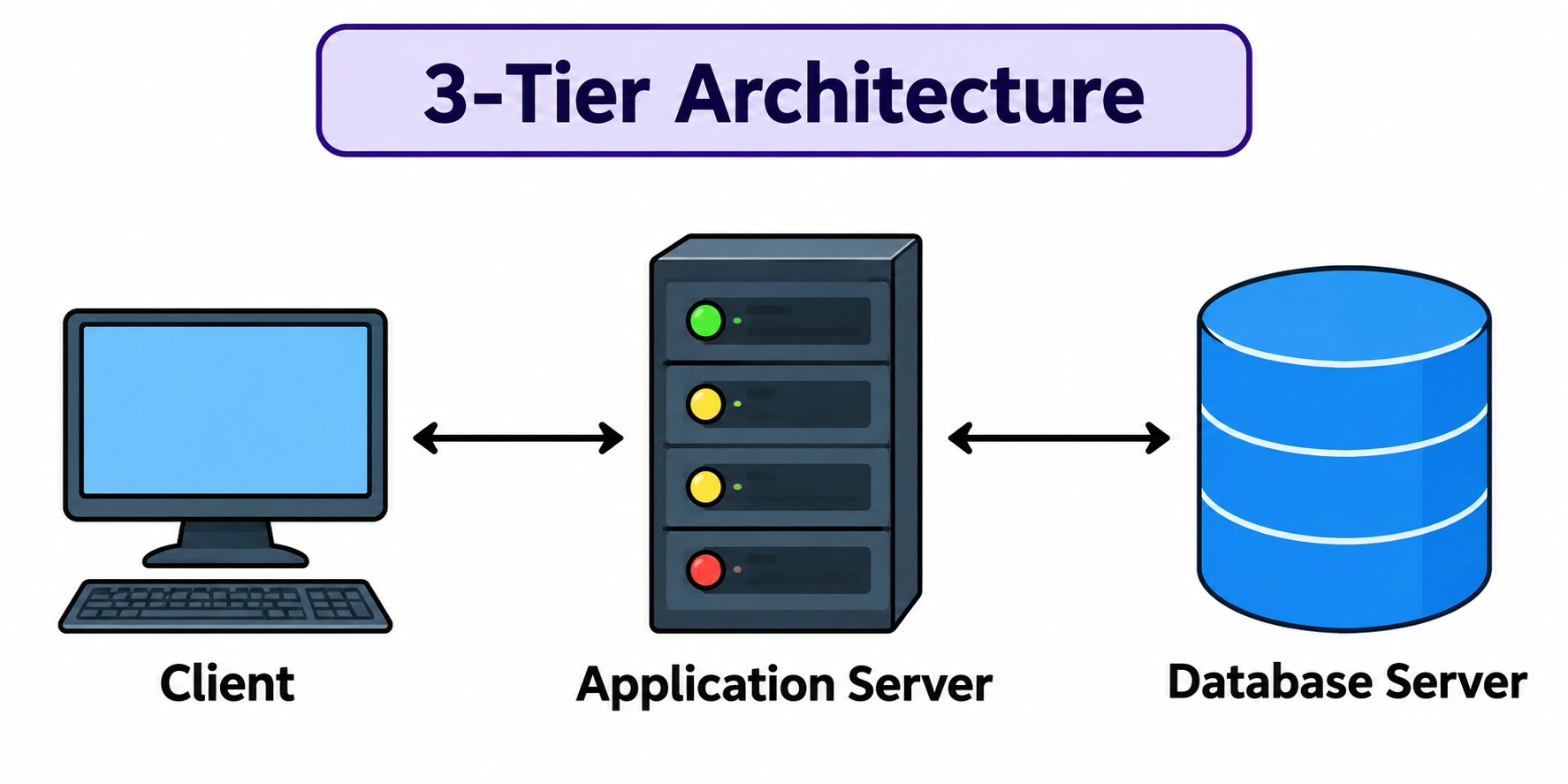
3-Tier Architecture में तीन अलग-अलग layers होती हैं — Client Layer, Application (Business Logic) Layer और Database Layer। Client सीधे डेटाबेस से बात नहीं करता, बल्कि बीच में मौजूद application server सारी processing handle करता है और फिर डेटाबेस से जरूरी डाटा लाकर client तक पहुंचाता है। ज्यादातर बड़ी websites और enterprise applications इसी architecture पर based होती हैं, क्योंकि इसमें security और scalability बेहतर होती है।
Three-Schema Architecture in Hindi – थ्री-स्कीमा आर्किटेक्चर
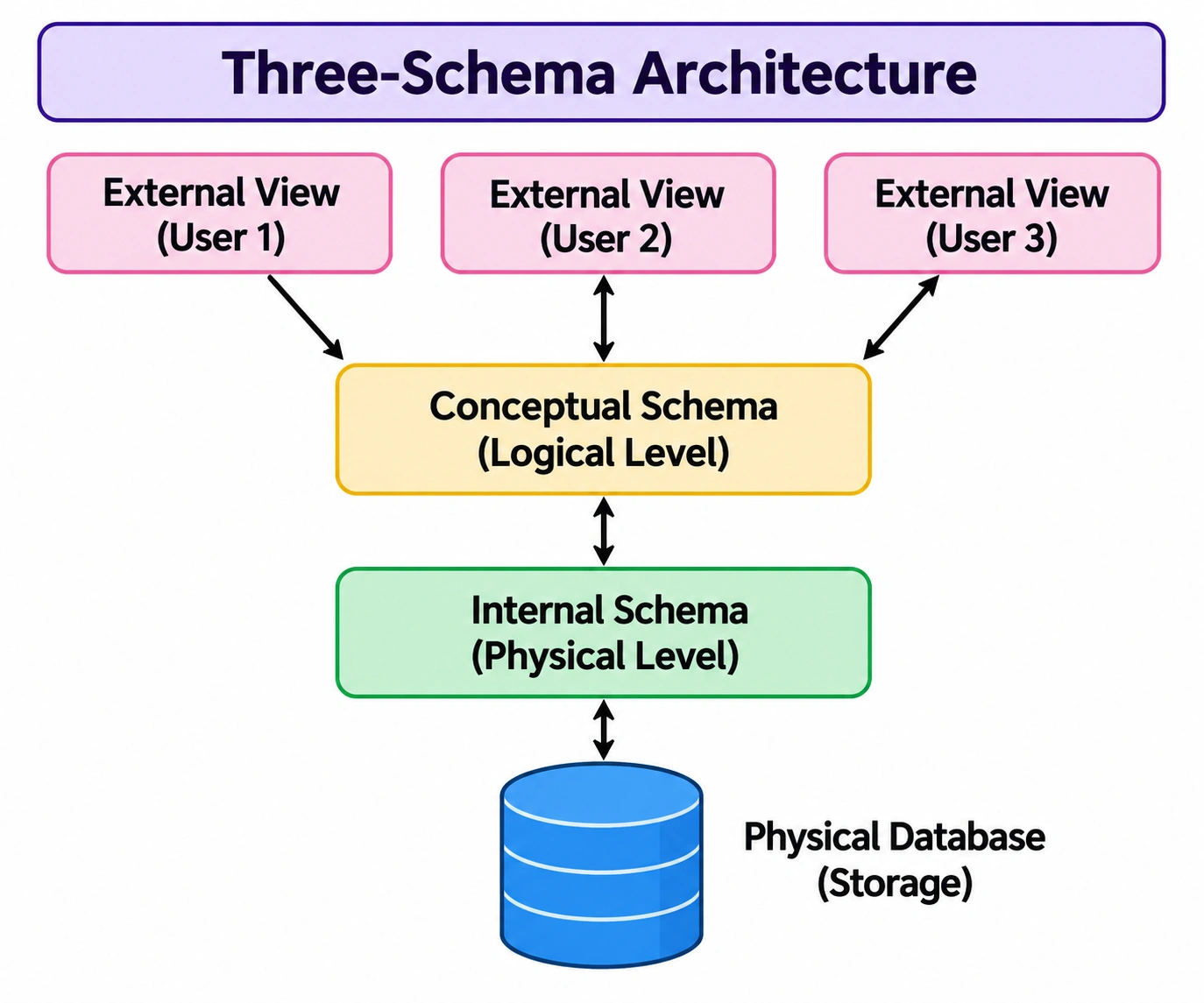
1. Internal Level
यह सबसे निचला level है, जो यह बताता है कि डाटा फिजिकल रूप से storage device (hard disk) पर कैसे store है — जैसे files, indexes और उनकी actual storage structure। यह level ज्यादातर database administrators से जुड़ा होता है, सामान्य यूज़र से नहीं।
2. Conceptual Level
यह middle level है, जो पूरे डेटाबेस का logical structure बताता है — यानी कौन-कौन सी tables हैं, उनमें कौन से relationships हैं, बिना यह बताए कि वे physically कैसे store हुई हैं। यह level पूरे organization के लिए एक common view की तरह काम करता है।
3. External Level
यह सबसे ऊपरी level है, जिसे User View भी कहा जाता है। अलग-अलग users या applications को डेटाबेस का सिर्फ वही हिस्सा दिखाया जाता है जो उनके काम से related है, बाकी पूरा डाटा उनसे hidden रहता है। इससे security भी बनी रहती है और complexity भी कम होती है।
Data Independence in Hindi – डाटा इंडिपेंडेंस
Three-Schema Architecture का एक बड़ा फायदा यह है कि यह Data Independence को संभव बनाता है — यानी एक level में बदलाव करने पर दूसरे levels पर असर नहीं पड़ता।
1. Physical Data Independence
इसका मतलब है कि Internal Level (यानी डाटा फिजिकल रूप से कैसे store है) में बदलाव करने से Conceptual Level पर कोई असर नहीं पड़ता। जैसे अगर storage hardware बदल दिया जाए, तो भी tables का logical structure वैसा ही बना रहता है।
2. Logical Data Independence
इसका मतलब है कि Conceptual Level में बदलाव करने से External Level (यूज़र की view) पर कोई असर नहीं पड़ता। जैसे अगर किसी टेबल में एक नया column जोड़ दिया जाए, तो भी पुराने applications बिना किसी बदलाव के काम करते रहेंगे।
Advantages of DBMS Architecture in Hindi – DBMS आर्किटेक्चर के फायदे
- Data Independence: एक level में बदलाव करने पर दूसरे levels प्रभावित नहीं होते, जिससे maintenance आसान होता है।
- Better Security: External Level की मदद से हर यूज़र को सिर्फ जरूरी डाटा ही दिखाया जा सकता है।
- Simplified User View: यूज़र को पूरे complex डेटाबेस की जानकारी नहीं चाहिए होती, सिर्फ अपने काम से जुड़ा हिस्सा ही देखना पड़ता है।
- Scalability: खासकर 3-Tier Architecture में जरूरत के हिसाब से servers अलग से बढ़ाए जा सकते हैं।
- Easy Maintenance: layers अलग-अलग होने से किसी एक हिस्से को update करना बाकी सिस्टम को बिना प्रभावित किए संभव होता है।
Disadvantages of DBMS Architecture in Hindi – DBMS आर्किटेक्चर की सीमाएं
- Increased Complexity: जितनी ज्यादा layers होंगी, सिस्टम को design और manage करना उतना ही complex हो जाता है।
- Higher Cost: खासकर 3-Tier जैसी architecture में अलग-अलग servers सेटअप करने में ज्यादा खर्चा आता है।
- Slower in Simple Cases: बहुत छोटे applications के लिए multi-layer architecture इस्तेमाल करना unnecessary overhead बन सकता है।
- Expert Requirement: इसे सही तरीके से design और maintain करने के लिए experienced database architects की जरूरत होती है।
Difference Between 2-Tier and 3-Tier Architecture in Hindi – 2-Tier और 3-Tier आर्किटेक्चर में अंतर
Exam में यह difference काफी बार पूछा जाता है, इसलिए नीचे दी गई table अच्छे से समझ लें:
| Basis | 2-Tier Architecture | 3-Tier Architecture |
|---|---|---|
| Layers | सिर्फ Client और Database, दो layers होती हैं | Client, Application Server और Database — तीन layers होती हैं |
| Communication | Client सीधे डेटाबेस से जुड़ता है | Client पहले application server से जुड़ता है, फिर server डेटाबेस से बात करता है |
| Security | अपेक्षाकृत कम सुरक्षित, क्योंकि client का direct access होता है | ज्यादा सुरक्षित, क्योंकि client का डेटाबेस से कोई direct connection नहीं होता |
| Suitable For | छोटे और सीमित users वाले applications | बड़े, enterprise-level और ज्यादा users वाले applications |
Conclusion – निष्कर्ष
DBMS Architecture यह तय करती है कि यूज़र, application और डेटाबेस आपस में किस तरह जुड़ेंगे और डाटा कैसे flow करेगा। 1-Tier से लेकर 3-Tier तक इसके अलग-अलग types अलग-अलग जरूरतों के लिए उपयुक्त होते हैं, जबकि Three-Schema Architecture (Internal, Conceptual, External) यह सुनिश्चित करता है कि डाटा को अलग-अलग levels में व्यवस्थित रखा जाए और Data Independence जैसी सुविधा मिल सके। सही architecture चुनना किसी भी डेटाबेस सिस्टम की performance, security और scalability के लिए बेहद जरूरी होता है।