
Data Structure in Hindi – Data Structure क्या है?
Table of Contents
- Data Structure in Hindi – Data Structure क्या है?
- Need of Data Structure in Hindi – Data Structure की आवश्यकता
- Types of Data Structure in Hindi – Data Structure के प्रकार
- Operations on Data Structure in Hindi – Data Structure पर संचालन
- Advantages of Data Structure in Hindi – Data Structure के फायदे
- Disadvantages of Data Structure in Hindi – Data Structure की सीमाएं
- Applications of Data Structure in Hindi – Data Structure के उपयोग
- Difference Between Linear and Non-Linear Data Structure in Hindi – अंतर
- FAQs
Data Structure in Hindi – Data Structure क्या है?
- Data Structure एक ऐसा तरीका है जिसके through डाटा को कंप्यूटर की memory में इस तरह organize और store किया जाता है कि उसे आसानी से access और modify किया जा सके।
- सरल शब्दों में समझें तो यह डाटा को रखने का एक structured तरीका है, ताकि उस पर काम करना efficient बन सके।
- इसका मुख्य उद्देश्य होता है डाटा को इस तरह व्यवस्थित करना कि operations (जैसे search, insert, delete) कम से कम समय में पूरे हो सकें।
- इसमें arrays, linked lists, stacks, queues, trees और graphs जैसे कई अलग-अलग structures शामिल होते हैं।
- Data Structure का उपयोग programming, database design, operating systems और लगभग हर software application में किया जाता है।
- इसे programmers और software engineers इस्तेमाल करते हैं ताकि उनका code efficient और scalable बन सके।
- अगर सही data structure न चुना जाए, तो program धीमा हो सकता है और memory भी ज्यादा खर्च हो सकती है।
Example of Data Structure (उदाहरण)
मान लीजिए किसी college में students का रिकॉर्ड रखना है। अगर हम सभी students के नाम एक साधारण list में रखें, तो किसी एक student को ढूंढने में काफी समय लग सकता है। लेकिन अगर हम इसी डाटा को एक tree या hash-based structure में organize करें, तो search बहुत तेज़ हो जाती है — यह example exam mein bhi likha ja sakta hai।
इसी तरह, किसी browser के "Back" बटन का काम एक Stack data structure पर आधारित होता है, जहां आखिरी visited page सबसे पहले वापस मिलता है।
Need of Data Structure in Hindi – Data Structure की आवश्यकता

Data Structure की जरूरत इसलिए पड़ी क्योंकि सिर्फ डाटा को store करना काफी नहीं होता, उसे efficient तरीके से इस्तेमाल करना भी उतना ही जरूरी है:
- Efficient Data Access: डाटा को जल्दी search और access करने के लिए।
- Memory Optimization: उपलब्ध memory का सबसे बेहतर इस्तेमाल करने के लिए।
- Faster Processing: बड़े डाटा पर operations को तेज़ी से perform करने के लिए।
- Better Organization: डाटा को logically व्यवस्थित रखने के लिए, ताकि उसे समझना आसान हो।
- Reusability: एक बार बनाए गए structure को अलग-अलग programs में दोबारा इस्तेमाल करने के लिए।
Types of Data Structure in Hindi – Data Structure के प्रकार
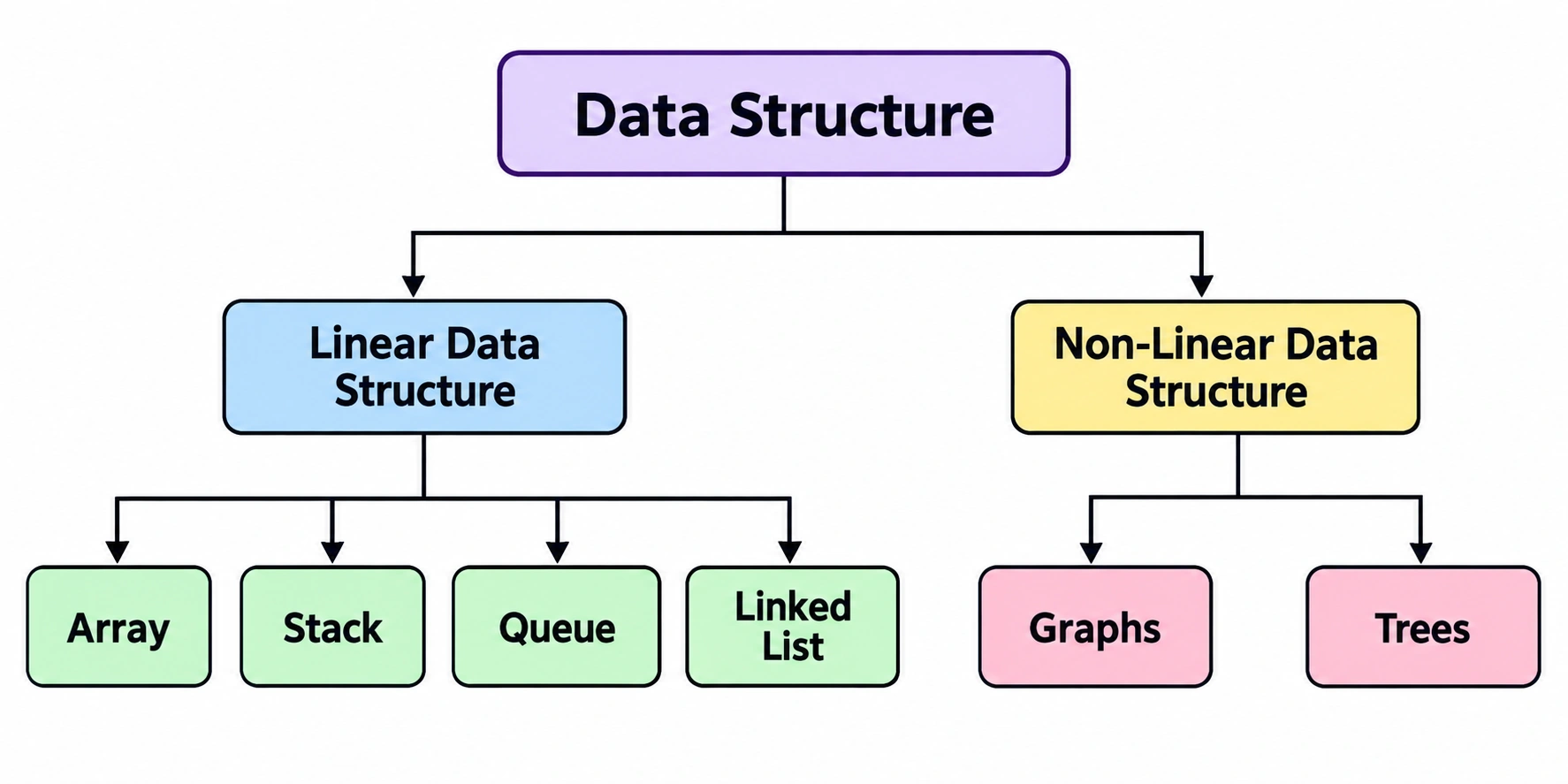
Data Structure को मुख्यतः इस आधार पर बांटा जाता है कि डाटा elements आपस में किस तरह arrange होते हैं:
1. Linear Data Structure
Linear Data Structure में सभी elements एक sequence या क्रम में एक के बाद एक जुड़े होते हैं, यानी हर element का सिर्फ एक ही पहले वाला और एक ही अगला element होता है। इसकी मुख्य categories हैं:
- Array: एक जैसे डाटा types के elements को एक continuous memory location में स्टोर किया जाता है।
- Linked List: elements (nodes) आपस में pointers के through जुड़े होते हैं, जिससे memory allocation dynamic रहता है।
- Stack: यह LIFO (Last In First Out) principle पर काम करता है, यानी जो element सबसे आखिरी में डाला गया, वही सबसे पहले निकाला जाता है।
- Queue: यह FIFO (First In First Out) principle पर काम करता है, यानी जो element सबसे पहले डाला गया, वही सबसे पहले निकाला जाता है।
2. Non-Linear Data Structure
Non-Linear Data Structure में elements एक सीधी line में नहीं, बल्कि hierarchical या interconnected तरीके से arrange होते हैं, यानी एक element के कई पहले या अगले elements हो सकते हैं। इसकी मुख्य categories हैं:
- Tree: डाटा को parent-child hierarchy में organize किया जाता है, जैसे किसी company का organizational chart।
- Graph: इसमें nodes (vertices) और उन्हें जोड़ने वाले edges होते हैं, जो complex relationships को represent करने के लिए इस्तेमाल होते हैं, जैसे social network connections।
Operations on Data Structure in Hindi – Data Structure पर संचालन
- Traversing: data structure के हर element को एक-एक करके access करना।
- Insertion: data structure में कोई नया element जोड़ना।
- Deletion: data structure से कोई मौजूद element हटाना।
- Searching: data structure में किसी specific element को ढूंढना।
- Sorting: elements को किसी particular क्रम (ascending/descending) में व्यवस्थित करना।
- Merging: दो अलग-अलग data structures को मिलाकर एक नया structure बनाना।
Advantages of Data Structure in Hindi – Data Structure के फायदे
- Efficient Data Access: सही structure चुनने से डाटा तक पहुंचना काफी तेज़ हो जाता है।
- Better Memory Utilization: memory का इस्तेमाल ज्यादा optimized तरीके से होता है।
- Code Reusability: एक बार बना structure अलग-अलग programs में दोबारा इस्तेमाल किया जा सकता है।
- Simplifies Problem Solving: complex problems को structured तरीके से solve करना आसान हो जाता है।
- Improved Performance: algorithms तेज़ी से run करते हैं, जिससे overall application की speed बढ़ती है।
Disadvantages of Data Structure in Hindi – Data Structure की सीमाएं
- Complex Implementation: कुछ data structures (जैसे trees, graphs) को समझना और implement करना beginners के लिए मुश्किल हो सकता है।
- Extra Memory Usage: Linked List जैसे structures में pointers store करने के लिए अतिरिक्त memory चाहिए होती है।
- Time-Consuming Design: सही data structure चुनने और design करने में काफी समय लग सकता है।
- Requires Strong Fundamentals: इसे effectively इस्तेमाल करने के लिए programming की अच्छी समझ जरूरी होती है।
Applications of Data Structure in Hindi – Data Structure के उपयोग
- Database Management: डेटाबेस में डाटा को efficiently store और retrieve करने के लिए।
- Operating Systems: memory management और process scheduling जैसे कामों के लिए।
- Compiler Design: code को parse और analyze करने के लिए trees और stacks का इस्तेमाल होता है।
- Networking: data packets को route करने के लिए graph-based structures इस्तेमाल होते हैं।
- Artificial Intelligence: problem-solving algorithms और decision trees बनाने के लिए।
Difference Between Linear and Non-Linear Data Structure in Hindi – अंतर
Exam में यह difference बहुत बार पूछा जाता है, इसलिए नीचे दी गई table को अच्छे से याद कर लें:
| Basis | Linear Data Structure | Non-Linear Data Structure |
|---|---|---|
| Arrangement | Elements एक क्रम में एक-दूसरे से जुड़े होते हैं | Elements hierarchical या interconnected तरीके से जुड़े होते हैं |
| Memory | Memory में आमतौर पर sequentially store होते हैं | Memory में non-sequentially store होते हैं |
| Traversal | एक ही pass में traverse किया जा सकता है | Traverse करने के लिए अक्सर एक से ज्यादा pass चाहिए होते हैं |
| Complexity | Implementation अपेक्षाकृत सरल होता है | Implementation ज्यादा जटिल होता है |
| Examples | Array, Linked List, Stack, Queue | Tree, Graph |
Conclusion – निष्कर्ष
Data Structure, डाटा को efficient तरीके से organize और manage करने का एक बुनियादी concept है, जो हर programmer के लिए सीखना जरूरी है। Array, Linked List, Stack, Queue जैसे Linear structures और Tree, Graph जैसे Non-Linear structures अलग-अलग situations में इस्तेमाल होते हैं। सही data structure चुनने से program की speed और memory दोनों बेहतर हो जाती हैं, इसलिए database design से लेकर AI algorithms तक हर जगह इसकी अहम भूमिका होती है।