
Table of Contents
- Information Security in Hindi – सूचना सुरक्षा क्या है?
- Need of Information Security in Hindi – सूचना सुरक्षा की आवश्यकता
- Principles of Information Security (CIA Triad) in Hindi – सूचना सुरक्षा के सिद्धांत
- Types of Information Security in Hindi – सूचना सुरक्षा के प्रकार
- Threats to Information Security in Hindi – सूचना सुरक्षा के लिए खतरे
- Measures to Ensure Information Security in Hindi – सूचना सुरक्षा के उपाय
- Advantages of Information Security in Hindi – सूचना सुरक्षा के फायदे
- Disadvantages of Information Security in Hindi – सूचना सुरक्षा की चुनौतियां
- Applications of Information Security in Hindi – सूचना सुरक्षा के उपयोग
- FAQs
Information Security in Hindi – सूचना सुरक्षा क्या है?
Endless Horse – Think You Can Find the End? Play The Game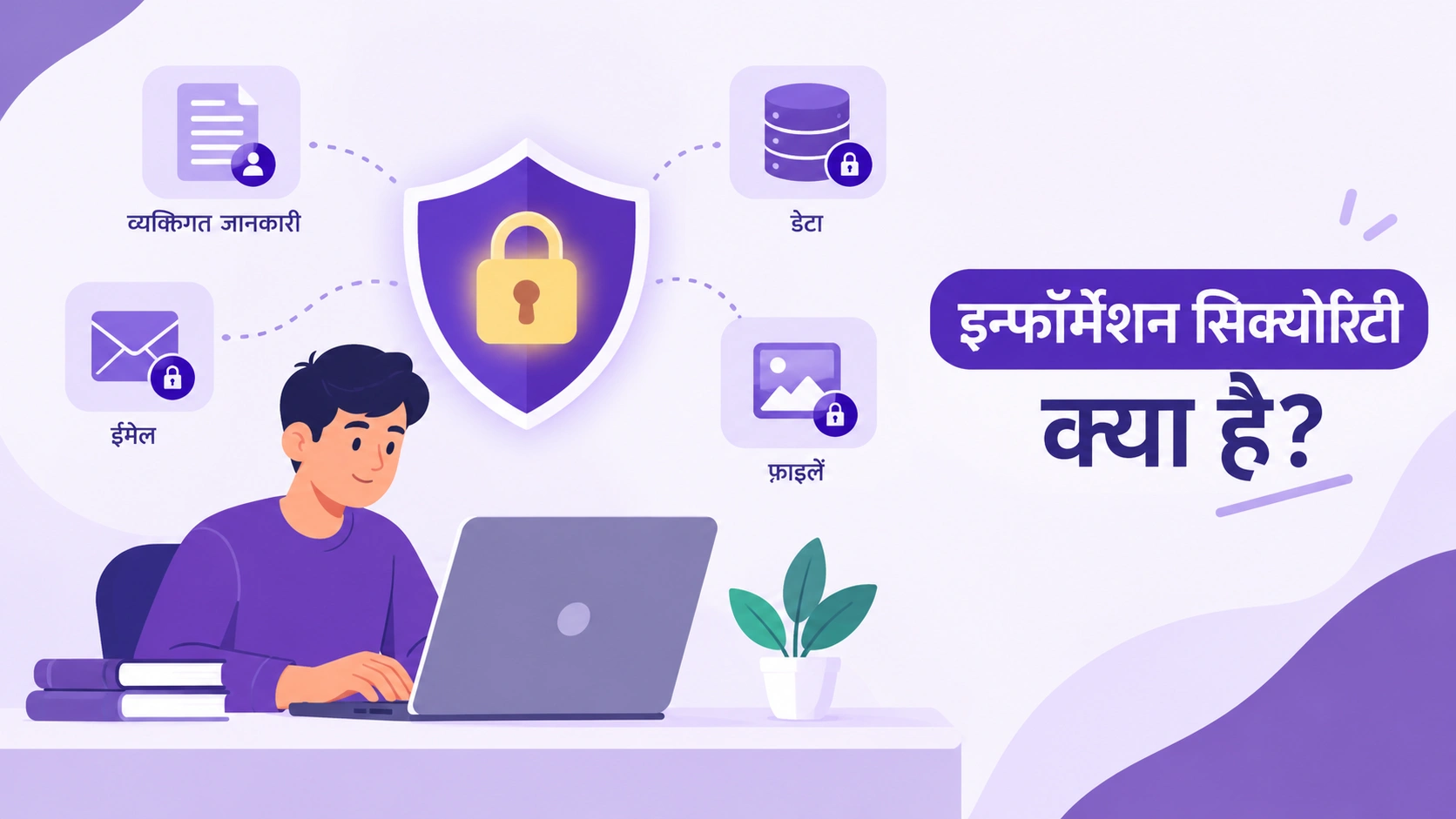
- Information Security यानी सूचना सुरक्षा का मतलब है डाटा और information को unauthorized access, use, disclosure, modification या destruction से बचाना।
- यह सिर्फ डिजिटल डाटा तक सीमित नहीं है — physical records, डॉक्यूमेंट्स और verbal information भी इसमें शामिल होती हैं।
- इसका मुख्य goal तीन चीज़ों को बनाए रखना होता है — Confidentiality, Integrity और Availability, जिन्हें साथ में CIA Triad कहा जाता है।
- यह individuals, organizations और सरकार, सभी levels पर जरूरी होता है, क्योंकि हर जगह sensitive डाटा handle होता है।
- Information Security में policies, procedures और technical tools (जैसे firewall, encryption) का combination इस्तेमाल किया जाता है।
- Cybersecurity से यह मिलता-जुलता concept है, लेकिन थोड़ा broader है क्योंकि इसमें non-digital records की सुरक्षा भी आती है।
- ज्यादातर organizations में एक dedicated Information Security टीम या officer होता है जो इन policies को implement और monitor करता है।
Example of Information Security (उदाहरण)
जब आप online banking use करते हैं, तो login के समय पासवर्ड के साथ OTP भी मांगा जाता है — यह एक practical information security example है, जहाँ authentication की दो layers मिलाकर account को unauthorized access से बचाया जाता है
Need of Information Security in Hindi – सूचना सुरक्षा की आवश्यकता

आज के समय में जब ज्यादातर डाटा डिजिटल form में store होता है, तब information security की जरूरत पहले से कहीं ज्यादा बढ़ गई है:
- 1. Data Breach से बचाव: unauthorized access से sensitive डाटा को leak होने से रोकना।
- 2. Financial Loss रोकना: cyber अटैक की वजह से होने वाले financial नुकसान से बचना।
- 3. Legal Compliance: IT Act, GDPR जैसे कानूनी नियमों का पालन करना जरूरी होता है।
- 4. Customer Trust बनाए रखना: customers को भरोसा दिलाना कि उनका डाटा सुरक्षित है।
- 5. Business Continuity: किसी अटैक के बाद भी business operations बिना रुके चलते रहें।
- 6. National Security: सरकार और defense जैसे sectors में sensitive information की सुरक्षा देश की सुरक्षा से भी जुड़ी होती है।
Principles of Information Security (CIA Triad) in Hindi – सूचना सुरक्षा के सिद्धांत
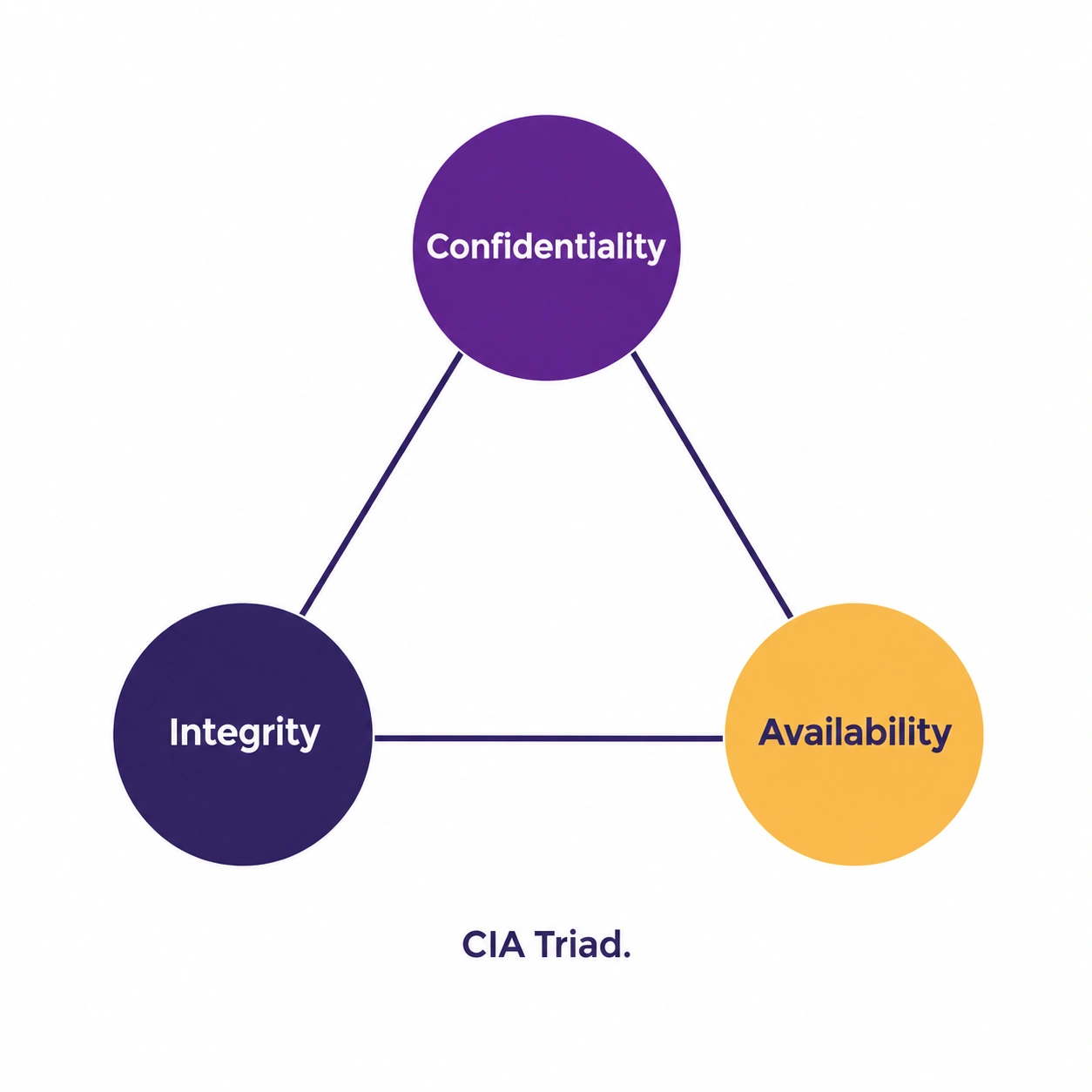
Information Security तीन core principles पर based होती है, जिन्हें मिलाकर CIA Triad कहा जाता है:
1. Confidentiality
Confidentiality यह सुनिश्चित करती है कि information सिर्फ authorized लोगों तक ही पहुंचे। इसे achieve करने के लिए encryption, पासवर्ड और access control जैसे तरीके इस्तेमाल किए जाते हैं, ताकि कोई unauthorized व्यक्ति sensitive डाटा न देख सके।
2. Integrity
Integrity का मतलब है कि डाटा को बिना authorization के बदला न जा सके, यानी information accurate और complete बनी रहे। अगर कोई attacker डाटा को बीच में tamper कर दे, तो integrity break हो जाती है, इसलिए checksums और digital signatures जैसे तरीके इस्तेमाल होते हैं।
3. Availability
Availability यह सुनिश्चित करती है कि authorized यूज़र को जब भी जरूरत हो, तब डाटा या सिस्टम उपलब्ध रहे। DDoS अटैक जैसे threats availability को प्रभावित कर सकते हैं, इसलिए बैकअप और redundant सिस्टम रखे जाते हैं ताकि service बिना रुके चलती रहे।
Types of Information Security in Hindi – सूचना सुरक्षा के प्रकार
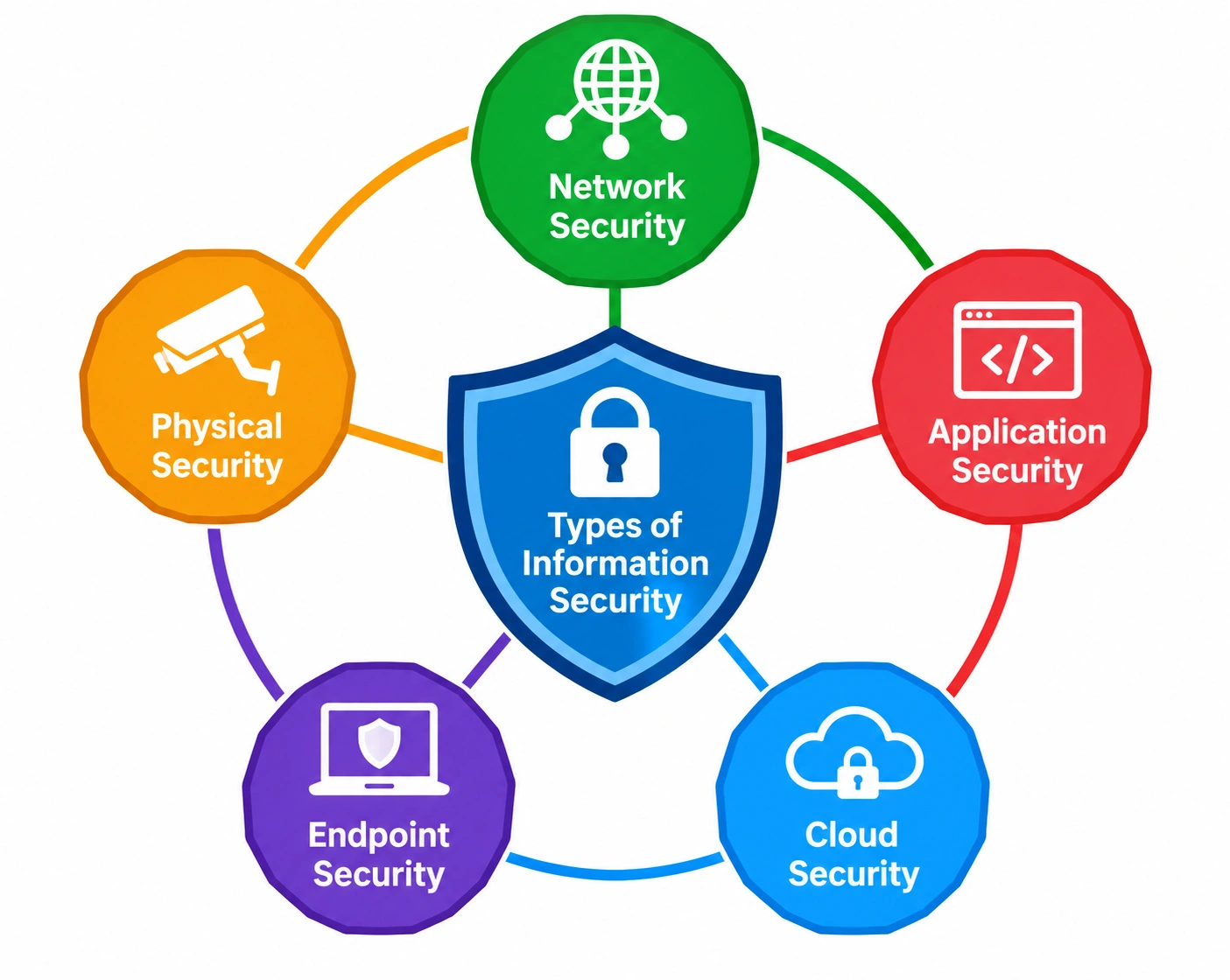
Information Security को technical रूप से कुछ मुख्य categories में divide किया जाता है, हर category अलग layer या area को cover करती है:
1. Network Security
Network Security का काम है computer नेटवर्क को unauthorized access, misuse और अटैक से सुरक्षित रखना। इसमें डाटा जब एक डिवाइस से दूसरे डिवाइस तक नेटवर्क के through travel करता है, उसे intercept होने से बचाया जाता है। इसके लिए firewalls, Intrusion Detection Systems (IDS), Intrusion Prevention Systems (IPS) और VPN जैसे tools इस्तेमाल होते हैं। बड़ी कंपनियों में network security टीम routers, switches और सर्वर तक की unauthorized access को भी लगातार monitor करती है।
2. Application Security
Application Security में सॉफ्टवेयर applications के अंदर मौजूद vulnerabilities को ढूंढकर उन्हें fix किया जाता है, ताकि attacker उनका फायदा न उठा सके। यह security development के समय से ही शुरू हो जाती है — secure coding practices, regular कोड रिव्यू और penetration testing के through। SQL Injection और Cross-Site Scripting (XSS) जैसे common application-level अटैक इसी category में आते हैं, इसलिए हर नए अपडेट के बाद apps को दोबारा टेस्ट करना जरूरी होता है।
3. Cloud Security
Cloud Security में क्लाउड platforms (जैसे AWS, Azure, Google Cloud) पर store किए गए डाटा, applications और infrastructure को सुरक्षित रखा जाता है। चूंकि क्लाउड में डाटा provider के सर्वर पर रहता है, इसलिए encryption, identity और access management (IAM) पर खास ध्यान दिया जाता है। एक common mistake यह होती है कि कई बार क्लाउड storage buckets गलती से publicly accessible छूट जाते हैं, जिससे डाटा leak का खतरा बढ़ जाता है — इसलिए proper कॉन्फिगरेशन चेक करना जरूरी होता है।
4. Endpoint Security
Endpoint Security में लैपटॉप, मोबाइल, tablets और IoT डिवाइस जैसे individual endpoints को threats से बचाया जाता है, क्योंकि यही डिवाइस नेटवर्क में एंट्री पॉइंट होते हैं। इसमें antivirus सॉफ्टवेयर, device encryption और Mobile Device Management (MDM) tools इस्तेमाल किए जाते हैं। Remote work बढ़ने के बाद endpoint security और भी इम्पॉर्टेंट हो गई है, क्योंकि employees अब कई अलग-अलग डिवाइस और locations से कंपनी के डाटा को access करते हैं।
5. Physical Security
Physical Security में सर्वर, data centers और अन्य हार्डवेयर infrastructure को चोरी, आग, या unauthorized physical entry जैसे खतरों से बचाया जाता है। इसमें biometric locks, CCTV cameras, security गार्ड्स और environmental controls (जैसे fire suppression systems) शामिल होते हैं।
Threats to Information Security in Hindi – सूचना सुरक्षा के लिए खतरे
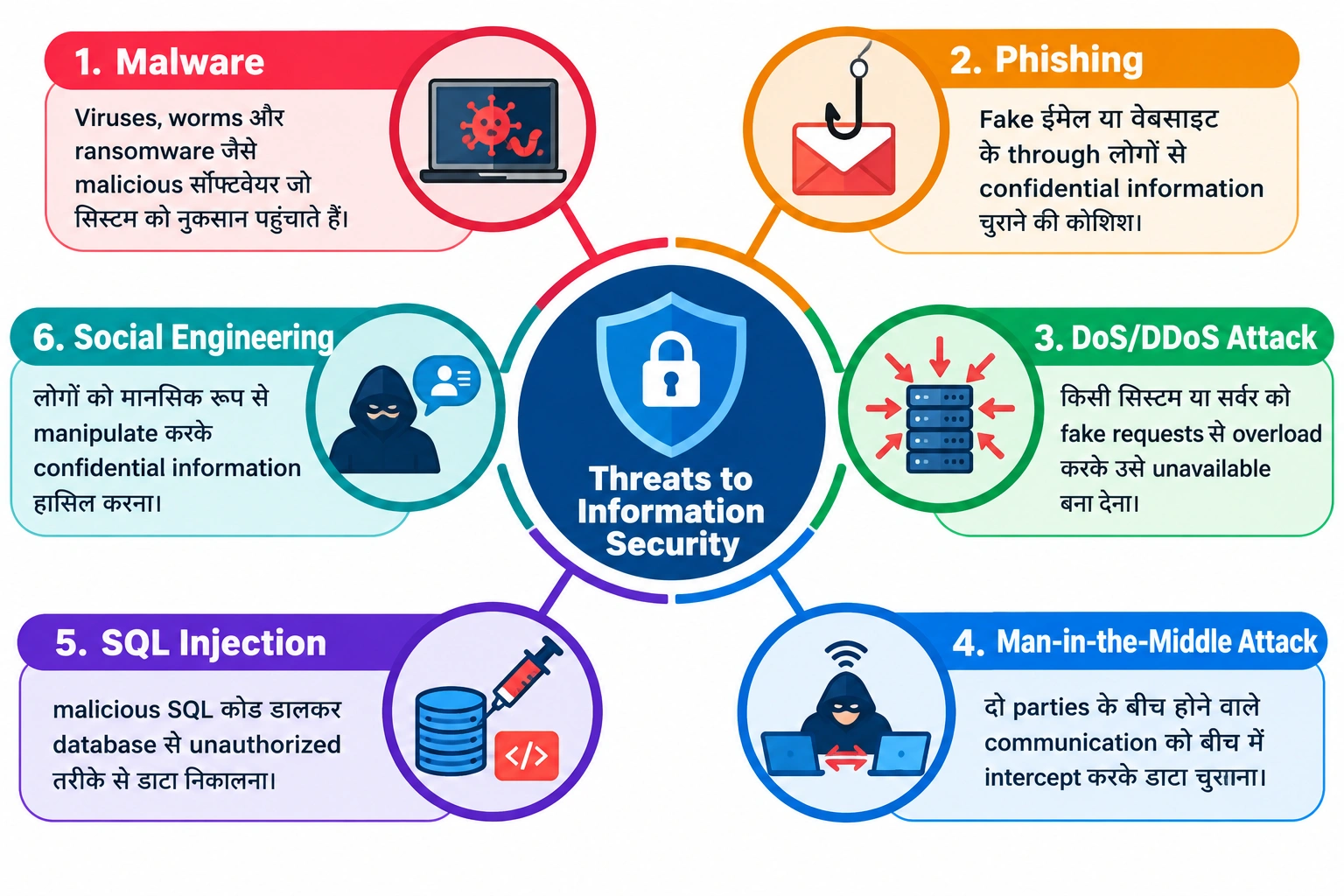
- 1. Malware: viruses, worms और ransomware जैसे malicious सॉफ्टवेयर जो सिस्टम को नुकसान पहुंचाते हैं।
- 2. Phishing: fake ईमेल या वेबसाइट के through लोगों से confidential information चुराने की कोशिश।
- 3. DoS/DDoS Attack: किसी सिस्टम या सर्वर को fake requests से overload करके उसे unavailable बना देना।
- 4. Man-in-the-Middle Attack: दो parties के बीच होने वाले communication को बीच में intercept करके डाटा चुराना।
- 5. SQL Injection: malicious SQL कोड डालकर database से unauthorized तरीके से डाटा निकालना।
- 6. Social Engineering: लोगों को मानसिक रूप से manipulate करके confidential information हासिल करना।
Measures to Ensure Information Security in Hindi – सूचना सुरक्षा के उपाय
- 1. Encryption: डाटा को ऐसे format में convert करना जिसे सही key के बिना पढ़ा न जा सके।
- 2. Firewall: नेटवर्क के आने-जाने वाले traffic को monitor करके unauthorized access को रोकना।
- 3. Multi-Factor Authentication: login के लिए पासवर्ड के साथ OTP जैसा दूसरा verification step जोड़ना।
- 4. Access Control: यह तय करना कि कौन-सा यूज़र किस डाटा या सिस्टम तक पहुंच सकता है।
- 5. Regular Backups: डाटा का समय-समय पर बैकअप लेना ताकि अटैक के बाद भी डाटा recover किया जा सके।
- 6. Security Audits: सिस्टम की regularly जांच करना ताकि कोई vulnerability समय रहते पकड़ी जा सके।
Advantages of Information Security in Hindi – सूचना सुरक्षा के फायदे
- Data Protection: sensitive information unauthorized access से सुरक्षित रहती है। इससे employees और customers दोनों का confidential डाटा safe रहता है।
- Business Continuity: अटैक होने पर भी operations बिना ज्यादा रुकावट के चलते रहते हैं, क्योंकि backups और recovery plans पहले से तैयार होते हैं।
- Customer Trust: customers को भरोसा रहता है कि उनका डाटा सुरक्षित है, जिससे brand value बढ़ती है और लोग सेवा को दोबारा इस्तेमाल करने में हिचकिचाते नहीं।
- Legal Compliance: जरूरी कानूनी नियमों का पालन करना आसान हो जाता है, जिससे penalties और legal cases का खतरा भी कम हो जाता है।
- Reduced Financial Risk: डाटा breach जैसी घटनाओं से होने वाले financial नुकसान की संभावना कम होती है, साथ ही incident response पर लगने वाला खर्चा भी बचता है।
Disadvantages of Information Security in Hindi – सूचना सुरक्षा की चुनौतियां
- High Implementation Cost: अच्छे security tools और experts रखने में काफी खर्चा आता है, जो छोटी कंपनियों के लिए मुश्किल हो सकता है।
- Increased Complexity: सिस्टम में ज्यादा security layers जोड़ने से उन्हें manage करना कॉम्प्लेक्स हो जाता है, और इसके लिए skilled staff की भी जरूरत पड़ती है।
- Constantly Evolving Threats: attackers नए-नए तरीके निकालते रहते हैं, इसलिए security को भी लगातार अपडेट करना पड़ता है, वरना पुराने measures जल्दी outdated हो जाते हैं।
- User Inconvenience: ज्यादा security steps (जैसे बार-बार OTP) कभी-कभी यूज़र के लिए थोड़ा असुविधाजनक हो सकते हैं, जिससे कुछ users इन्हें skip करने की कोशिश भी करते हैं।
Applications of Information Security in Hindi – सूचना सुरक्षा के उपयोग
Information Security अलग-अलग industries में अलग तरीकों से इस्तेमाल होती है
- Banking and Finance: customer transactions और account details को सुरक्षित रखने के लिए, साथ ही online fraud और unauthorized transactions को रोकने के लिए भी इस्तेमाल होती है।
- Healthcare: patients के medical records को unauthorized access से बचाने के लिए, क्योंकि यह data बेहद sensitive और personal होता है।
- Government: citizens के डाटा और sensitive national information की सुरक्षा के लिए, जिसमें defense और public services से जुड़ा data भी शामिल होता है।
- E-commerce: online payments और customer डाटा को cyber threats से बचाने के लिए, ताकि shopping experience safe और भरोसेमंद बनी रहे।