
Table of Contents
 ▶
▶
- Paging in OS in Hindi – Paging क्या है?
- Need of Paging in Hindi – Paging की आवश्यकता
- How Paging Works in Hindi – Paging कैसे काम करता है?
- Advantages of Paging in Hindi – Paging के फायदे
- Disadvantages of Paging in Hindi – Paging की सीमाएं
- Difference Between Paging and Segmentation in Hindi – Paging और Segmentation में अंतर
- FAQs
Paging in OS in Hindi – Paging क्या है?
Endless Horse – Think You Can Find the End? Play The Game- Paging एक memory management technique है, जिसमें logical memory को fixed size के छोटे हिस्सों में बांटा जाता है, जिन्हें Pages कहा जाता है।
- इसी तरह physical memory (RAM) को भी उसी fixed size के हिस्सों में बांटा जाता है, जिन्हें Frames कहा जाता है।
- इसका मुख्य उद्देश्य यह होता है कि किसी process को RAM में contiguous (लगातार जुड़ी हुई) जगह देने की जरूरत खत्म हो जाए।
- इसमें OS एक Page Table maintain करता है, जो यह बताता है कि कौन-सा page किस frame में स्टोर है।
- Paging का इस्तेमाल लगभग हर modern operating system (Windows, Linux, macOS) में memory manage करने के लिए किया जाता है।
- इसे CPU का Memory Management Unit (MMU) hardware level पर handle करता है, जिससे यह process के लिए पूरी तरह transparent रहता है।
- इसका end-objective यह होता है कि memory का इस्तेमाल efficient तरीके से हो और external fragmentation जैसी समस्या पैदा न हो।
- अगर page table properly manage न किया जाए, तो memory access थोड़ा धीमा हो सकता है, क्योंकि हर access के लिए table check करना पड़ता है।
Example of Paging (उदाहरण)
मान लीजिए किसी किताब के सारे pages अलग-अलग shelves में बिखरे हुए रखे हैं, लेकिन किताब के आखिर में एक index दिया है जो बताता है कि कौन-सा page किस shelf पर है। जब भी किसी page की जरूरत हो, index देखकर सीधे उस shelf तक पहुंचा जा सकता है, बिना यह सोचे कि सारे pages एक साथ लगे हों। Paging भी बिल्कुल इसी तरह काम करती है, जहां Page Table वही index का काम करता है।
Need of Paging in Hindi – Paging की आवश्यकता

Paging से पहले memory allocation के तरीकों में कुछ ठोस समस्याएं थीं, जिन्हें हल करने के लिए इसे लाया गया:
- External Fragmentation से बचाव: बिना paging के RAM में छोटे-छोटे खाली टुकड़े बचते थे जो किसी काम के नहीं रहते थे।
- Non-Contiguous Allocation: किसी process को RAM में एक साथ लगातार जगह न मिलने पर भी उसे चलाना संभव बनाना।
- Better Memory Utilization: उपलब्ध memory का ज्यादा से ज्यादा efficient इस्तेमाल करना।
- Support for Virtual Memory: ऐसी processes को भी चलाना, जिनका size actual RAM से भी बड़ा हो।
- Simplified Memory Management: OS के लिए memory allocate और deallocate करना आसान बनाना।
How Paging Works in Hindi – Paging कैसे काम करता है?
Paging की working को समझने के लिए कुछ core concepts जानना जरूरी है:
1. Page and Frame
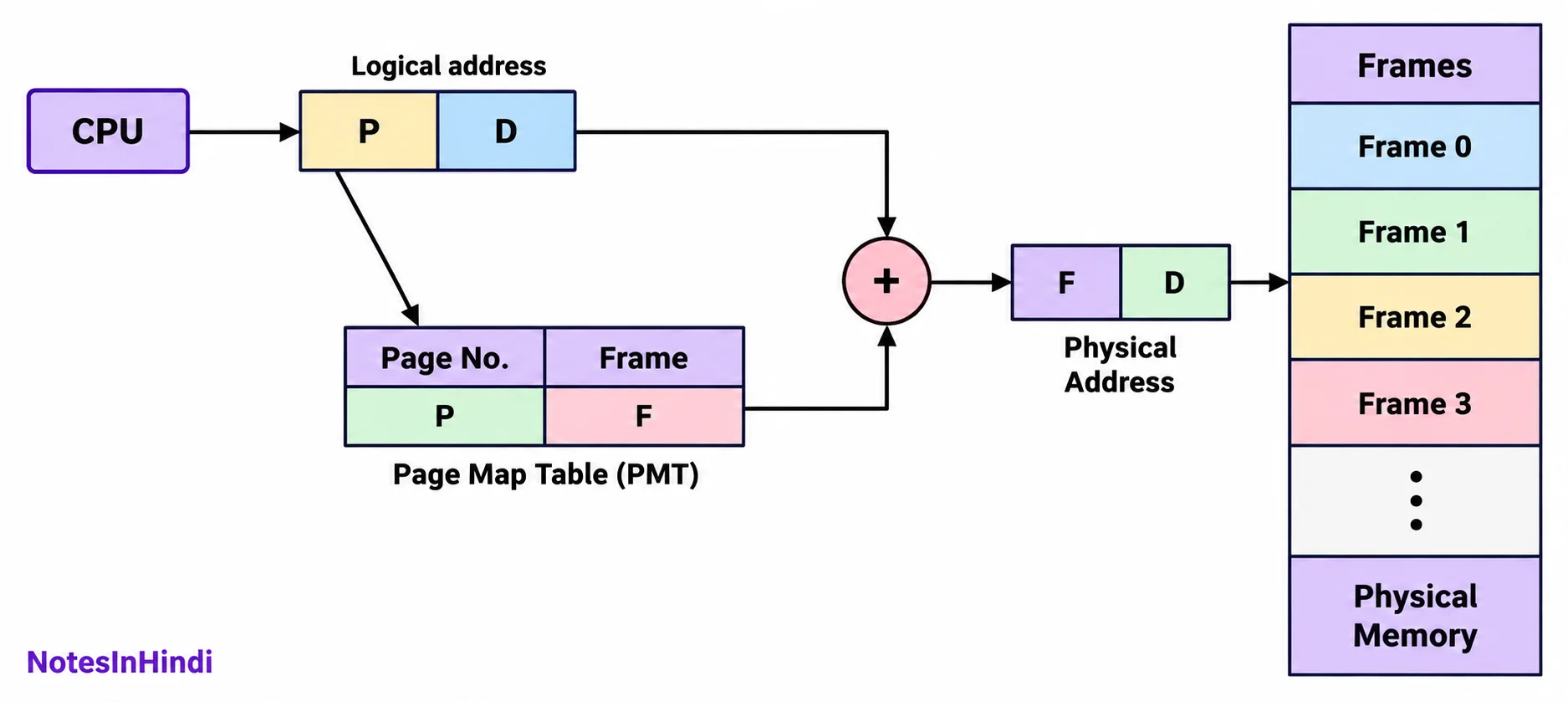
Logical memory (जो process इस्तेमाल करता है) को Pages में बांटा जाता है, जबकि Physical memory (RAM) को Frames में बांटा जाता है। दोनों का size हमेशा बराबर रखा जाता है, ताकि कोई भी page किसी भी खाली frame में fit हो सके।
2. Page Table
OS हर process के लिए एक अलग Page Table maintain करता है, जिसमें यह जानकारी होती है कि उस process का कौन-सा page, RAM के किस frame में रखा गया है। जब भी कोई page memory में access करना हो, सबसे पहले इसी table को देखा जाता है।
3. Address Translation
जब CPU कोई logical address generate करता है, तो उसे दो हिस्सों में तोड़ा जाता है — Page Number और Offset। Page Number की मदद से page table में संबंधित Frame Number ढूंढा जाता है, और फिर Frame Number के साथ Offset जोड़कर actual Physical Address निकाला जाता है।
4. TLB (Translation Lookaside Buffer)
हर बार पूरे page table को RAM में access करना धीमा होता है, इसलिए एक छोटा और तेज़ hardware cache इस्तेमाल किया जाता है जिसे TLB कहा जाता है। इसमें हाल ही में इस्तेमाल हुए page-to-frame mappings स्टोर रहते हैं, जिससे address translation काफी तेज़ हो जाती है।
Advantages of Paging in Hindi – Paging के फायदे
- No External Fragmentation: चूंकि pages और frames का size fixed होता है, इसलिए बीच में बचे छोटे खाली टुकड़ों की समस्या नहीं आती।
- Efficient Memory Utilization: RAM के किसी भी खाली frame का इस्तेमाल किया जा सकता है, चाहे वह कहीं भी हो।
- Simplified Allocation: OS के लिए memory allocate करना आसान हो जाता है, क्योंकि उसे contiguous space ढूंढने की चिंता नहीं करनी पड़ती।
- Supports Virtual Memory: इसकी मदद से बड़ी processes को भी उतने RAM के बिना चलाया जा सकता है, जितना उन्हें actually चाहिए।
Disadvantages of Paging in Hindi – Paging की सीमाएं
- Internal Fragmentation: किसी process का आखिरी page पूरी तरह भरा न हो, तो उस frame का बचा हुआ हिस्सा बेकार जाता है।
- Extra Memory Access: बिना TLB के, हर memory access के लिए पहले page table check करना पड़ता है, जिससे थोड़ा समय लगता है।
- Page Table Overhead: बड़ी processes के लिए page table का size भी काफी बड़ा हो सकता है, जो खुद memory लेता है।
- Implementation Complexity: paging को सही तरीके से implement करना, खासकर multi-level page tables के साथ, तकनीकी रूप से जटिल होता है।
Difference Between Paging and Segmentation in Hindi – Paging और Segmentation में अंतर
Exam में यह difference बहुत बार पूछा जाता है, इसलिए नीचे दी गई table को अच्छे से याद कर लें:
| Basis | Paging | Segmentation |
|---|---|---|
| Division Basis | Memory को fixed-size blocks (pages) में बांटा जाता है | Memory को logical units (segments) में बांटा जाता है, जिनका size अलग-अलग हो सकता है |
| Fragmentation | Internal fragmentation हो सकती है | External fragmentation हो सकती है |
| Address Structure | Page Number + Offset से बनता है | Segment Number + Offset से बनता है |
| Table Used | Page Table इस्तेमाल होती है | Segment Table इस्तेमाल होती है |
| User Visibility | Programmer के लिए पूरी तरह invisible होती है | Programmer के लिए logically visible हो सकती है (जैसे code, data segments) |
Conclusion – निष्कर्ष
Paging, operating systems में memory को efficient तरीके से manage करने का एक बुनियादी तरीका है, जो external fragmentation जैसी समस्या को खत्म करता है। Page, Frame, Page Table और TLB जैसे concepts मिलकर यह सुनिश्चित करते हैं कि कोई भी process बिना contiguous memory के भी सही तरीके से चल सके। भले ही इसमें internal fragmentation जैसी कुछ सीमाएं हों, लेकिन आज लगभग हर modern operating system इसी technique पर आधारित होकर memory manage करता है।